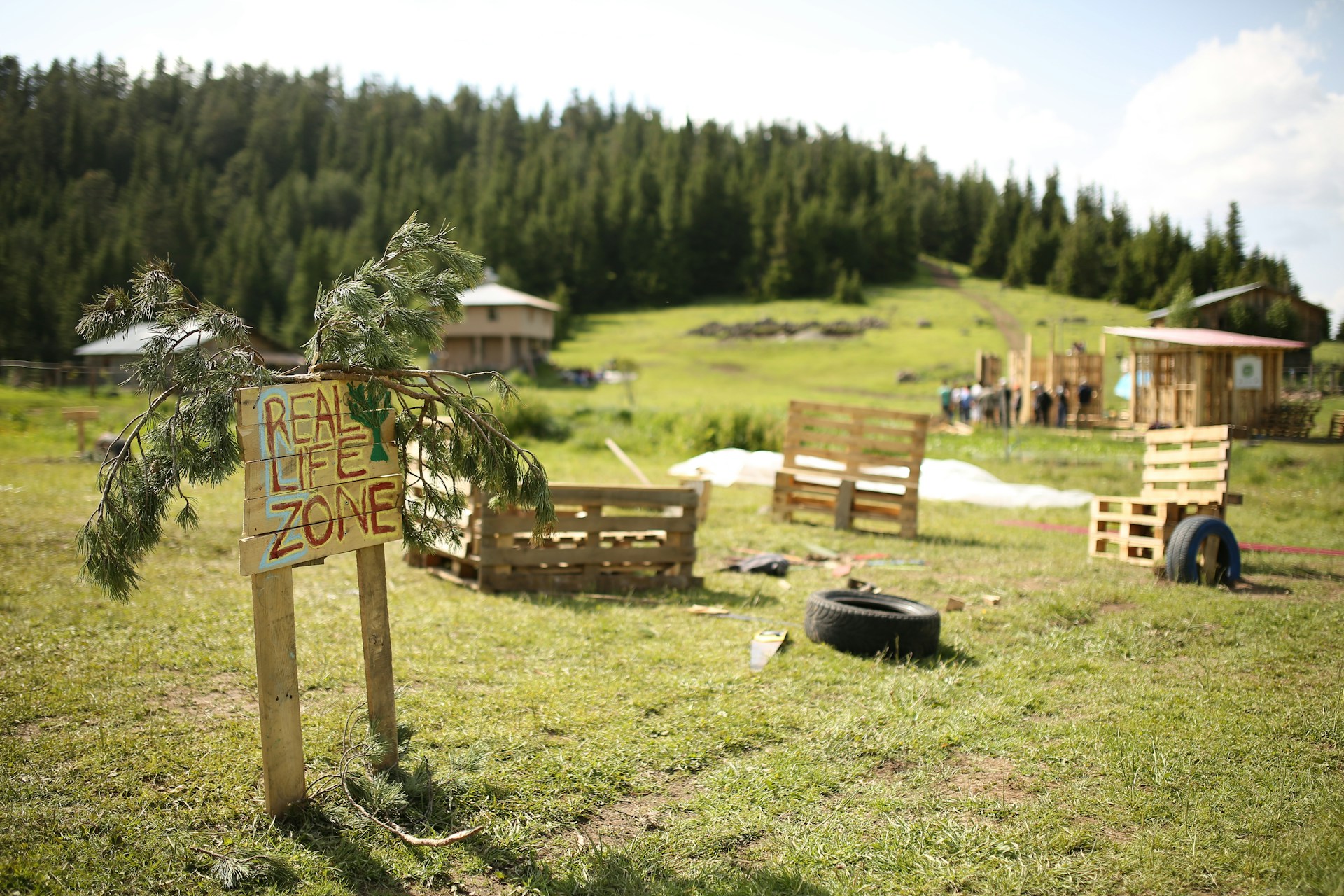
Laser tag center owners operate within known indoor constraints. Wall-to-wall carpeting, fixed ramp positions, and HVAC loads dictate maximum simultaneous players. Outdoor laser tag removes those ceilings. Fields, forests, vacant lots, or corporate lawns become the arena. The shift is structural: capacity is no longer bound by square footage under roof but by deployable equipment and site access.
Core Definition and Operational Mechanics
Laser tag outdoor uses the same infrared beam principle as indoor play. Handheld taggers emit coded pulses. Sensor arrays on vests register valid hits. Central software aggregates scores in real time. The difference lies in deployment scale and environmental tolerance. Indoor units assume controlled lighting and 20-25 °C ambient. Outdoor kits are engineered for direct sunlight, 0-35 °C swings, dust ingress, and occasional rain. Range extends from 150 m typical indoor to 300-350 m effective line-of-sight. Batteries run 10-12 continuous hours with hot-swap capability. These parameters are not incremental upgrades; they enable full-day events without mid-session rotation.
Game flow remains identical in logic: team assignment, objective briefing, active play, respawn or elimination, debrief. Yet open terrain introduces natural cover—tree lines, elevation changes, drainage ditches—that cannot be replicated in modular indoor mazes. Players move farther, coordinate over distance, and adapt tactics to landscape. Session length stretches from 12-15 minutes indoor to 25-35 minutes outdoor without fatigue, because rest zones are integrated into the field perimeter.
Format Variations for Different Market Segments
Operators select from three primary deployment models, each aligned to distinct revenue patterns.
Mobile Pop-Up
Equipment arrives in wheeled cases. Setup time: 45 minutes for 3,000 m². Target sites: municipal parks, school fields, festival grounds. Permits are daily or weekend-based. Ideal for market testing or seasonal activation. Staff: two technicians doubling as referees. Throughput: 80-120 players across four cycles on Saturday. No long-term lease exposure.
Semi-Permanent Lease
Seasonal agreement on underutilized land—0.5-1 hectare behind retail centers or industrial parks. Fencing, portable toilets, and check-in tent remain on-site. Operating window: April-October in temperate zones. Corporate block bookings dominate weekdays; family groups fill weekends. Equipment stays in weatherproof containers between sessions. Capital commitment limited to initial kit and perimeter materials.
Dedicated Outdoor Arena
Purpose-built venue on owned or long-lease property. Earthworks create berms, trenches, and elevated platforms. Permanent command hub with spectator seating and concession stand. Year-round potential via heated marquee overlays in winter. Highest capex but largest scalable capacity—up to 120 simultaneous players in tournament mode. Revenue mix: 40 % corporate, 35 % birthday packages, 25 % walk-in groups.
Each model shares the same equipment backbone; differences appear in site preparation and staffing depth.
Business Value Drivers for Existing Owners and New Entrants
Capacity Unlock
Indoor arenas plateau at 20-30 players per 15-minute cycle. Outdoor fields sustain 50-80 players per 25-minute cycle. Hourly revenue potential rises 2.5-3× at comparable ticket price. The delta funds fleet expansion within one season.
Site Cost Arbitrage
Indoor rent in secondary markets: $18-25 per m² monthly. Outdoor daily permit: $150-400 flat. A 5,000 m² field used 20 weekends yields effective land cost under $2 per m² per operating day. Capital that would service a five-year lease instead purchases durable equipment with 5-7 year lifecycle.
Seasonal Smoothing
Indoor demand peaks Friday-Sunday. Outdoor corporate bookings fill Monday-Thursday. Summer camps lock June-August blocks. Net result: occupancy spreads from 45 % weekend-only to 70 % across seven days. Cash flow predictability improves; bank financing terms loosen.
Audience Breadth
Indoor skews 70 % youth. Outdoor corporate segment reaches 35-45 % of revenue. Team-building contracts are flat-rate, half-day or full-day, with catered add-ons. Average transaction value climbs 40 %. Birthday packages bundle bunkers and fog effects; parents pay premium for Instagram-worthy settings.
Barriers to Entry for New Operators
Start-up capital for mobile kit (40 taggers, vests, bases, cases): mid-five figures. No construction phase. First revenue within 14 days of equipment receipt. Compare to indoor build-out: 6-9 months, seven-figure outlay. Risk is staged—validate demand with pop-ups before committing to land improvements.
Equipment Categories and Selection Criteria
Primary Hardware
Taggers
Polymer chassis, filtered IR optics, red-dot sight, 300 m range, 10 h Li-ion pack, quick-release battery door. Weight distribution balanced for adult sprint cycles. Firmware supports multiple fire modes: single, burst, sniper delay.
Sensor Vests
Eight discrete hit zones, 360° coverage, breathable mesh panels, adjustable straps 80-140 cm chest. LED color coding per team, haptic pulse on hit, RFID chip for auto-roster sync. Deactivation timer prevents “ghost players.”
Command Bases
Wireless mesh hub, 500 m radius, solar-assisted charging, stackable to 2 m, audible objective cues. API feed to large-screen leaderboard. GPS boundary lock disables taggers outside perimeter.
Support Systems
Charging Racks
40-slot docking stations, smart conditioning cycles, LED readiness indicators. Full recharge in 3 hours from 20 %.
Transport Cases
Pelican-style hard shells with custom foam, wheeled, stackable. Load-out for 20 units fits standard van.
Software Suite
Cloud dashboard: session scheduling, live scoring, heat-map analytics, player database, automated post-game email recaps with upsell prompts.
Accessory Layers That Lift Transaction Value
Inflatable Bunker Sets
Ten modular units, UV-reactive fabric, rapid inflation (90 seconds per piece). Reconfigure weekly to maintain novelty. Cost per set recouped in 12-15 premium parties.
Fog Generators
DMX-sync to game phases, low-lying or vertical plume options. Extends perceived production value; operators report 18 % higher repeat rate after introduction.
LED Grenades & Props
Programmable flash patterns, 30-second area denial effect. Adds scenario depth without additional staff.
Spectator Screens & Photo Backdrops
55-inch weatherproof displays, branded vinyl banners. Converts waiting parents into concession buyers; attachment rate rises from 40 % to 65 %.
Mobile Command Tent
10 × 10 m pop-up with integrated power, check-in tablets, merchandise display. Functions as revenue center between cycles.
Impact on Business Metrics
Utilization Rate
Indoor benchmark: 55 % across operating hours. Outdoor with corporate fill: 72 %. Each 10 % lift adds proportional margin given low variable cost.
Customer Acquisition Cost
Pop-up model leverages park foot traffic and social check-ins. CAC drops 40 % versus indoor Google Ads dependency.
Lifetime Value
Outdoor birthday groups return 2.3× on average versus 1.6× indoor. Corporate clients book 4.8 sessions annually once initial pilot succeeds.
EBITDA Margin
Mobile outdoor: 38-42 % after land and labor. Dedicated arena: 45-50 % at scale. Indoor comparison: 28-34 %.
Procurement and Maintenance Protocols
Select suppliers with 48-hour replacement SLAs and on-site spare parts kits (5 % of fleet). Schedule quarterly deep cycles: lens polish, sensor recalibration, battery health checks. Documented procedures reduce downtime to under 1 % of operating hours.
Train staff on dual roles: referee + tech support. Certification program: 4 hours theory, 8 hours field practice. Cross-functional teams keep labor at 1.5 headcount per 20 players.
Path Forward for Owners and Prospective Operators
Existing indoor centers pilot outdoor with one weekend kit. Data from four activations determines full-season commitment. New entrants launch mobile to prove concept; revenue funds land improvements if metrics hold.
Outdoor laser tag is not a side offering—it is a parallel operating system. Equipment durability and site mobility convert variable land access into predictable high-margin cash flow. The model scales without the capital intensity of indoor build-out. Operators who align hardware selection, site strategy, and programming to open-field realities capture segments indoor formats cannot serve profitably. Execution timing separates market leaders from late followers.
FAQ
What distinguishes outdoor laser tag equipment from indoor units?
Outdoor units feature extended range, full environmental sealing, and reinforced construction to withstand field conditions without performance degradation.
How does outdoor laser tag function logistically?
Infrared beams register hits on sensor vests; bases relay data via RF mesh to central software. Setup time: 45 minutes for 3,000 m² field.
Where do operators source sites for laser tag near me visibility?
Municipal parks, corporate lots, and retail overflow areas under short-term permits. Google Business Profile optimization drives 70 % of bookings.
Are laser tag party packages viable outdoors?
Yes. Bundled bunker sets, fog effects, and catering partnerships yield 30 % higher transaction value than base admission.
What ROI timeline is realistic for laser tag outdoor investment?
At 65 % weekend utilization and 40 % weekday corporate fill, full capex recovery occurs within 14-18 months.
Outdoor laser tag is not an adjunct product—it is a scalable operating model. Equipment durability, site mobility, and scenario depth convert underutilized land into high-margin revenue streams. Operators who align procurement, staffing, and programming with field realities secure structural advantages that indoor formats cannot replicate. The numbers are conclusive; execution determines market position.